
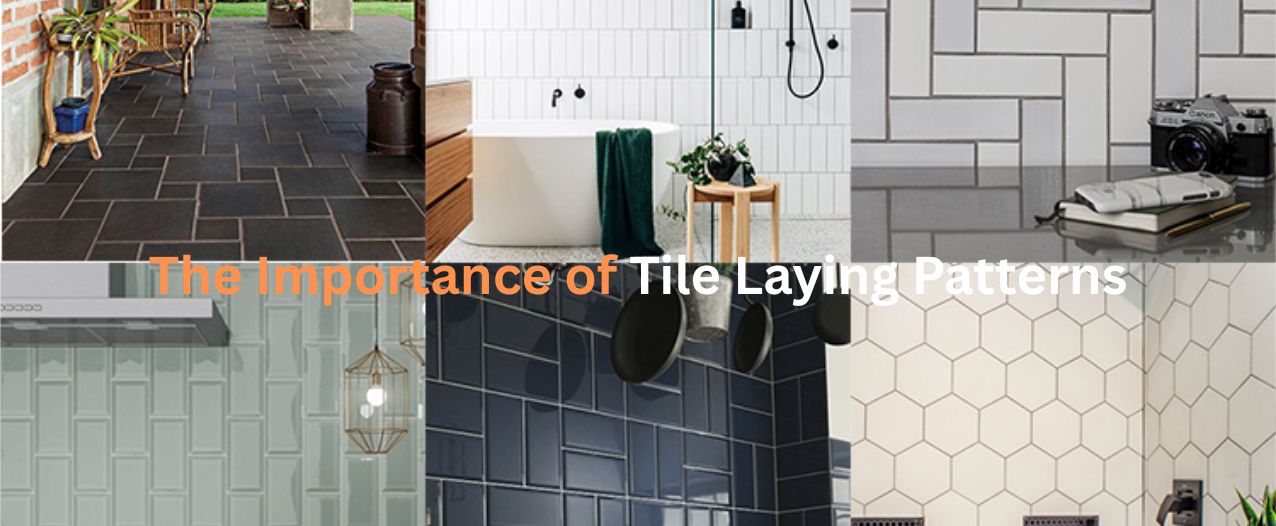
You’re entering a room, and your attention is immediately drawn to the floor. It’s the arrangement of the tiles, not simply the tiles themselves. Have you ever entered a room that seemed to have a particular flow to it? That is how tile laying patterns work their magic.
Tile laying patterns serve more purposes than merely filling a room; they also create a statement, a tone, and an atmosphere.
The problem is that most individuals don’t even consider tile patterns. After selecting a tile they like, they believe that’s all that counts. Not at all.
Depending on how those tiles are put, a space might feel larger, cozier, more elegant, or even chaotic if done incorrectly. Let’s now discuss the significance of these patterns and how to choose the finest option for your room.
What Are Tile Laying Patterns?
All right, let’s analyze it. The many configurations of tiles that might be used during installation are essentially known as tile laying patterns. There is a real strategy involved; it’s not just a matter of placing tiles next to one another.
Consider it a riddle. While certain patterns give a room a more polished appearance, others provide a decorative element or even give the impression that a room is larger than it is.
A straight lay pattern, for instance, is sleek and contemporary, but a herringbone arrangement exudes a high-end designer vibe. Other designs deceive the eye, such as diagonal layouts that enlarge a small corridor. In other words, the pattern is really important.
Why Do Tile Laying Patterns Matter?
What makes tile laying patterns important, then? Easy. They have an impact on the appearance, texture, and even longevity of the tiles in your room. Let’s investigate further:
Change How Big or Small a Room Feels
A diagonal tile design may be quite effective. Do you want a corridor to seem longer? The solution is a running bond pattern. The arrangement of tiles may positively or negatively alter how you perceive space.
Add Personality & Style
You don’t have to have plain sandstone walling or flooring. Creative and opulent patterns like basketweave, chevron, and herringbone are added. A simple tile may become a work of art with the correct pattern if you want something that is truly unique.
Affect Durability & Maintenance
Were you aware that certain designs increase the durability of tiles? Over time, a brick bond (or staggered) arrangement lessens cracks by improving weight distribution. It is frequently found in high-traffic locations, such as commercial spaces or kitchens, for this reason.
Impact Cost & Installation Time
When it comes to installation, not all patterns are created equal. Some are simple and inexpensive, such as a basic grid. Some, like Versailles or herringbone patterns, cost more because they need more cuts, time, and skill.
Therefore, understanding your tendencies might help you make better plans if you’re on a tight budget.
Most Popular Tile Laying Patterns
Let’s discuss the most popular tile laying patterns and what makes them unique:
1. Straight Lay Pattern
The traditional tiles are arranged in a straightforward row-and-column pattern.
Modern, clean, and simple to install.
Perfect for simple designs or situations where the tile takes center stage.
2. Diagonal Lay Pattern
The angle of the tiles is 45 degrees.
Ideal for cramped hallways or little spaces since it gives the impression of a larger area.
Gives a hint of refinement without being overly ostentatious.
3. Herringbone Pattern
Fashionable zigzag pattern found in upscale residences.
makes a room appear well-designed and costly right away.
Both walls and floors may use it.
4. Chevron Pattern
Like herringbone, but with V-shaped tiles cut at an angle.
Gives off a sleek, vibrant appearance.
Perfect for chic flooring, backsplashes, or accent walls.
5. Basketweave Pattern
The arrangement of tiles resembles a woven basket.
Traditionally used in bathrooms, its style is ageless.
Gives every room a classic or antique character.
6. Running Bond (Brick) Pattern
The traditional brickwork style.
Gives texture, improves durability, and helps conceal flaws.
Excellent for raw or industrial spaces.
Tile Laying Patterns for Different Spaces
Let’s now align the appropriate tile laying patterns with the appropriate area:
- Living rooms and spacious spaces
For a more elegant look, use a diagonal lay or herringbone.
Straight lay for a sleek, contemporary appearance.
- Toilets and Compact Areas
Brick designs or basketweave for a warm, non-slip surface.
Mosaic or chevron for that luxurious spa feel.
- Backsplashes and Kitchens
For style and functionality, choose straight lay, brick bond, or chevron.
Using subway tiles in a running bond gives it a classic appearance.
- Patios and Pathways Outside
For endurance, use diagonal layouts or modular designs.
Tiles with texture to stop people from sliding in damp places.
Select Maroota Sandstone for Reliable Sandstone
High-quality tiles are also necessary if you’re spending money on attractive tile designs. Maroota Sandstone can help with it. In addition to being long-lasting, our sandstone tiles offer your room a luxurious, organic appearance.
If you’re planning a patio, pool area, or interior space, we have tiles that handle severe weather conditions, possess an earthy, eternal splendor. They are perfect for designs that combine elegance and functionality.
Maroota Sandstone is the best option for sandstone suppliers if you want beautiful and long-lasting sandstone tiles.
Read Also: How to Install Sandstone Pavers for Australian Backyards?
Final Thoughts
Ultimately, tile laying patterns are revolutionary. They affect not just the appearance of a room but also its feel, the durability of your tiles, and even the amount of upkeep required.
Therefore, the next time you’re choosing tiles, consider the pattern in addition to color and texture. It makes a huge difference.
FAQ’s
Ans: A straight lay pattern is the simplest—it’s just lining up tiles in a grid, no fancy cuts needed!
Ans: Yep! Diagonal and herringbone patterns can trick the eye into making a room feel larger than it is.
Ans: A classic brick bond or straight lay never goes out of style—simple, clean, and elegant.
Ans: Absolutely! Just make sure the patterns complement each other so your space doesn’t feel too busy.
Ans: If you want a high-end, custom look, then yes! Patterns like herringbone or chevron add a designer touch
No responses yet