
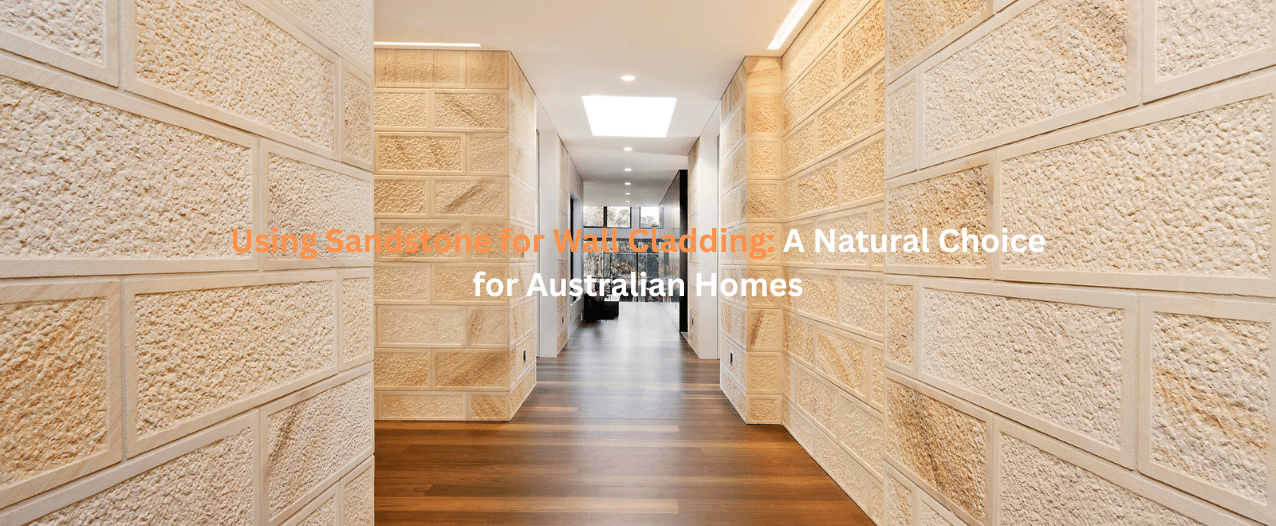
Ever see a house that seems like it might fit in Australia? It is so well-integrated with the surroundings that you would think it evolved naturally, not merely due to the layout or style.
Sandstone serves this purpose by tying the house to the land, the natural world, and the Australian way of life.
Sandstone for wall cladding is likely right under your nose (literally, if you live in New South Wales) if you’ve been considering updating your house or adding that “wow” element without going crazy. Not only is it local and natural, but it also looks beautiful.
Let’s have a look at everything. Sandstone wall cladding: what is it? What makes more Australians inclined to it? And is it all about appearances, or is there more going on?
What is Sandstone Wall Cladding Anyway?
Okay, let’s begin with the fundamentals. Although “wall cladding” may seem like something builders discuss at Bunnings, it’s actually rather easy.
Using thin sandstone slices, or occasionally bigger panels, to cover a building’s exterior or interior walls is known as sandstone wall cladding. It is comparable to a home skin, but it is far more attractive and long-lasting than anything you could buy in a bottle.
What about beauty? You don’t have to construct your entire house out of stone to have that unpolished, rustic look. It’s a design trick that shouts “premium” without breaking the bank. Australian houses are noted for their warmth, natural diversity, and rustic, textured feel.
Why Sandstone Feels Right at Home in Australia
Now let’s explore why using sandstone for wall cladding is more than simply beautiful:
- Natural Insulation: Sandstone provides warmth in the winter and cools your house in the summer. It’s like double-glazed windows in nature, except far more elegant and ageless.
- Tough as Nails: This material has likely existed since the time of the dinosaurs. It is durable, resistant to weather, and won’t fail you when times get hard.
- Low Maintenance: Do you dislike having to touch things up all the time? Your partner is Sandstone. It still looks brand new with the occasional tiny rinse. It also withstands the weather well; some people even claim that as it ages, it gets more attractive.
- Timeless Design: Since trends have changed, you won’t need to repaint or replace it in five years. The rock-solid style of sandstone is timeless.
Benefits of Using Sandstone for Australian Homes
Now let’s explore why using sandstone for wall cladding is more than simply beautiful:
1. Natural Insulation
Your house stays warmer in the winter and cooler in the summer thanks to sandstone. It’s like double-glazed windows in nature, except far more lovely and enduring.
2. Tough As Nails
This substance has likely existed since the time of the dinosaurs. It is durable, resistant to weather, and won’t fail you when times get hard.
3. Low Maintenance
Averse to frequent touch-ups? Your partner is Sandstone. It still looks brand new with the occasional tiny rinse. Furthermore, it ages well; some people even claim that as it ages, it gets more attractive.
4. Timeless Design
Trends have changed, so you won’t be replacing it or repainting it in five years. It’s truly a rock-solid style, so sandstone never goes out of style.
5. Indoor and Outdoor Friendly
Do you want to bring that feeling indoors? Sandstone is as effective inside. Consider kitchen backsplashes, living room feature walls, and fireplace surrounds.
Now, take a moment to consider where this may be used in your house.
Common Myths About Sandstone
Okay, let’s call out a few things people tend to get wrong:
“It’s too expensive!”
Although it’s not the most affordable material available, consider the big picture. You’re spending money on long-lasting beauty, little maintenance, and durability. It eventually pays for itself.
“It’s too soft and brittle.”
Sandstone is not all created equal. When properly put, high-quality cladding-grade sandstone is resilient. There’s a reason why public buildings employ it.
“It only suits traditional homes.”
Not at all. Sandstone may be used for any style, including farmhouse, Hamptons, coastal, and modern. It all relies on how you combine it with other components, such as concrete, metal, or wood.
“Too heavy to install.”
These days, there are lightweight cladding solutions that are expressly made to be easier to install without sacrificing appearance.
Think you’ve heard any of these before? You’re not alone. But the real story is often way better than the rumours.
Read Also: What Is Pool Coping? Types, Materials & Why It’s Essential for Your Pool
Wrapping Up
Sandstone for wall cladding is worthy of a prominent place on your mood board, whether you’re building, remodeling, or simply jotting down future thoughts on a tissue paper. Not just another lovely stone, it’s a part of our past, our landscape, and now it may be a part of your house.
It provides an unrivaled combination of charm and functionality. Using premium sandstone that is long-lasting and climate-appropriate, Maroota Sandstone has been assisting Australians in realizing their cladding dreams.
FAQ’s
Ans: Yes! It’s perfect for feature walls, fireplaces, bathrooms, and even kitchen splashbacks.
Ans: Sealing helps prolong its life and keeps it stain-free, especially for indoor use. Outdoor cladding can sometimes go without, but sealing gives that extra peace of mind.
Ans: Definitely. It’s locally sourced, natural, and doesn’t require heavy processing like many artificial cladding materials.
Ans: It may slightly weather, but that actually adds character. Think of it like denim—gets better with age.
Ans: Mild detergent, a soft brush, and a bit of elbow grease now and then. No fancy chemicals needed.
No responses yet